

The data that arrives late
When the temperature is written down on arrival, it's no longer any use for preventing the loss. Only for explaining it.
Logistics operators, shippers, retail chains and local businesses that today prove what happened with a photo, a spreadsheet or someone's word — and that want to add equipment and robots without changing systems.
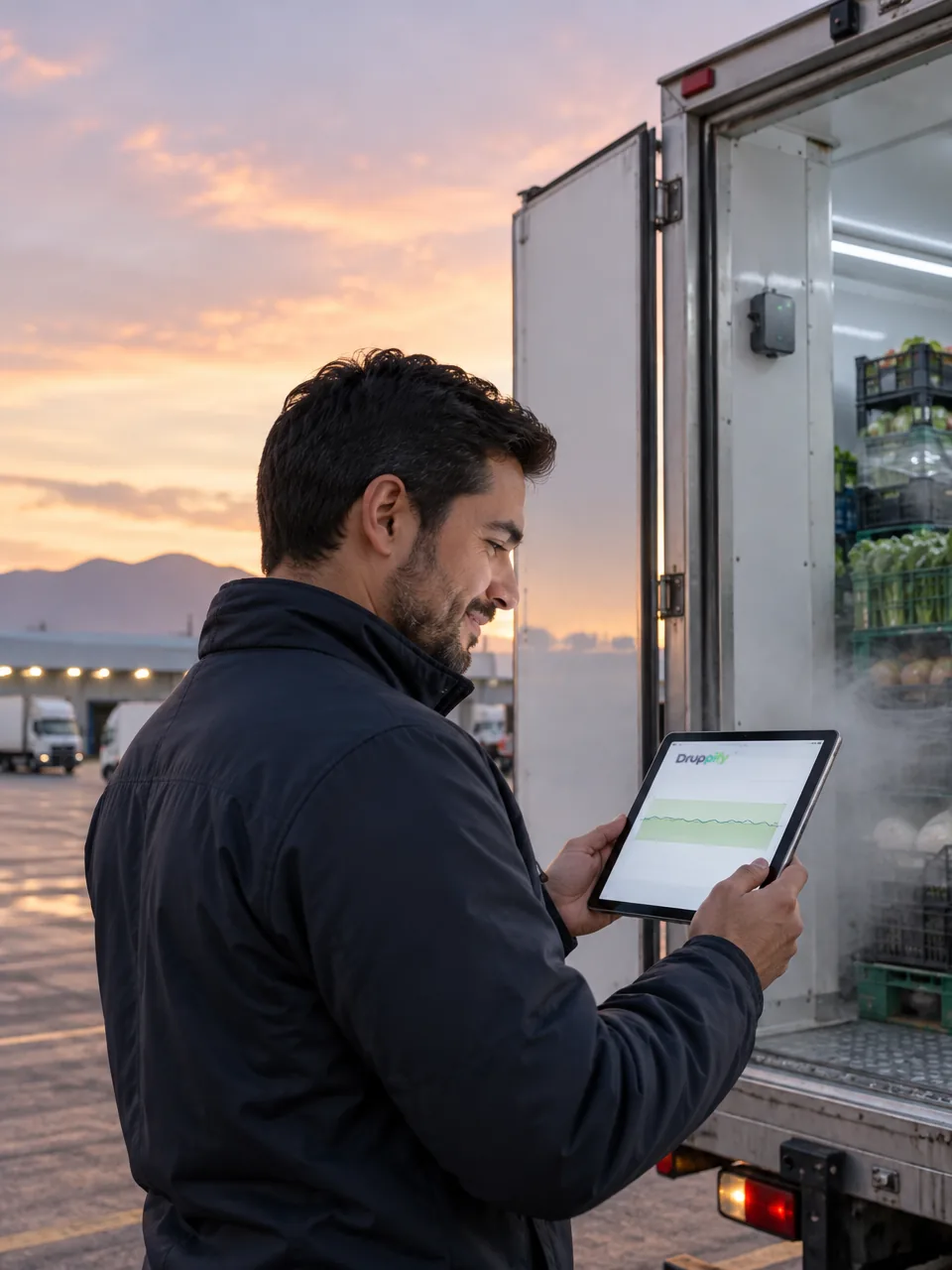
I know what happened because someone told me.
How it's done today
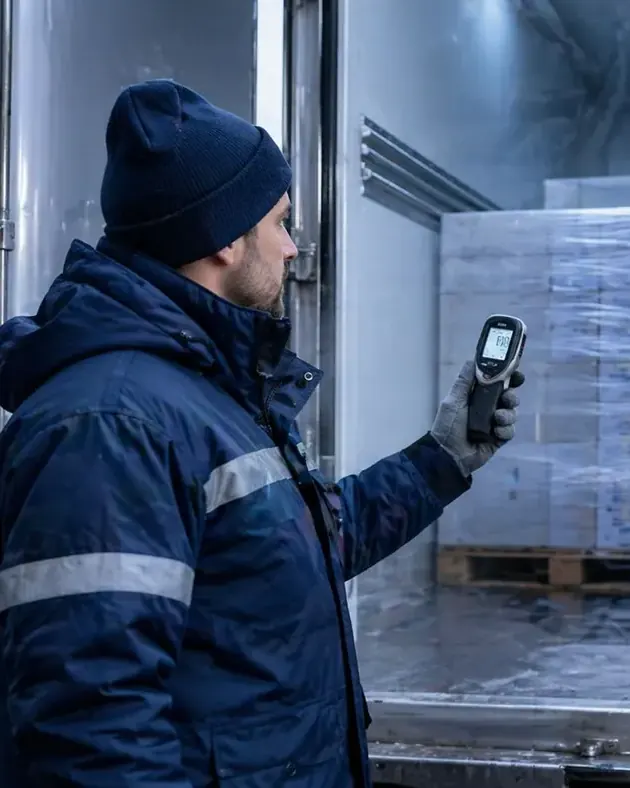
The driver writes down the temperature on arrival. The position is whatever a phone says, if it was switched on. The stocker reports out-of-stock gaps on the shelf when they get round to it. And pickup is confirmed with a message.
Of more than 13,000 shifts started in September 2026, 17.0% ended with no clock-out recorded and 83.0% with a clock-out recorded.
Real data · September 2026Source: Druppify operations, September 2026, aggregated figures from operators that use the platform.
When the temperature is written down on arrival, it's no longer any use for preventing the loss. Only for explaining it.
Your customer says one thing and your operator another. Without your own record, the argument goes to whoever insists the most.
Marked as done, without a single piece of evidence behind it. And you find out in the audit, three months later.
How much did the last claim you couldn't refute with your own data cost you? That's the number a node is compared against, not another sensor.
It isn't distrust. It's that capturing the data costs time for someone who's in a hurry, and as long as capture is one more task, it'll be done late, badly, or not at all.
| Today | With Druppify |
|---|---|
| Temperature written down by hand on arrival | Continuous reading, with an alert before the loss |
| Position reported over WhatsApp | The vehicle's position, not the phone's |
| Out-of-stock gaps when they get round to it | Audit round with position and photo |
| Pickup confirmed verbally | Opening the locker is the record |
Pickup and drop-off with no one at the counter. Who opened it, when and with which code.
Temperature, door openings and impacts throughout the trip, with an alert when the threshold is breached and not once the load has already been lost.
The vehicle's position, independent of the driver's phone, with origin and destination geofences.
They go round the store floor and return out-of-stock gaps by position, planogram and price differences.
The robot moves the goods, the person picks and packs. Waves are planned as a mix of both.
Each device records its evidence where the shifts, orders and deliveries already are. That's why it can be compared and charged for.
An inventory robot detects the out-of-stock gap. A verified person restocks it. Both happen in the same system, with the same evidence and the same close-out.
The whole store floor, aisle by aisle. It returns out-of-stock gaps by position, planogram and price differences.
With the exact position and the urgency. It isn't a report: it's a work order.
Verified, and almost always the same one who already covers that store floor.
Photo, position and time. The same proof you already use to pay for the shift.
The robot per round, the person per task. One close-out and one cost per store.
and the next round starts knowing what was restocked
The robot manufacturer doesn't have the person who restocks. The staffing company doesn't have the robot that detects. Closing that loop isn't about integrating two suppliers: it's about being the system where both already work.
Unit of value
One unit per component
SmartPickup is provided on free loan and charged per completed pickup. Nodes and GPS are sold or leased, with a subscription per active device per month. Robots follow the agreement with each partner, and there Druppify charges for orchestration.
Why we charge this way
Because capex doesn't behave the same way in all three cases. A locker pays for itself through pickup volume; a cold-chain node doesn't, and charging for it per event would be betting against your own operation.
What it's compared against
The cost of the claim you couldn't refute, and of the load you lost because you found out late.
We never compare against other software. The price is compared against the cost of the error it prevents.
We don't start with the full rollout. One device, one route, and the data flowing all the way through to billing. If it doesn't get there on its own, we don't go any further.
No. It's integrated with partners. Druppify provides the layer that turns data into evidence ready for settlement.
Not for device availability: that's the manufacturer's warranty, and it's written separately from ours.
We come away with the chosen component, the route or store where it starts, and the cost of the error it's compared against.
Book 45 minutesWhat we'll ask you