

The shift that falls through
At a store during peak. Your client sees it before you do, and that conversation costs more than the shift.
Companies that supply operational staff to retail, e-commerce and logistics: shoppers, pickers, stockers, warehouse operatives and couriers.

I need 40 verified people on Monday across 12 stores.
How it's done today
Between five and fifteen WhatsApp groups, a master spreadsheet only one person understands, and payments calculated by hand every fortnight.

Of more than 17,000 shifts assigned in September 2026, nobody showed up for 24.6% and someone showed up for 75.4%.
Of almost 4,500 absences in September 2026, 94.7% came without notice and 5.3% with notice: the person dropped out of the shift.
Time from when a shift is posted until someone takes it, for shifts covered in September 2026: 30.6% within the first hour, 33.4% in 1 to 24 hours, 9.2% in 1 to 3 days and 26.8% after 3 days. In total, 36.1% took more than a day.
Of more than 4,200 no-shows in September 2026, 89.9% came from people who were absent two or more times that month and 10.1% from people who were absent once.
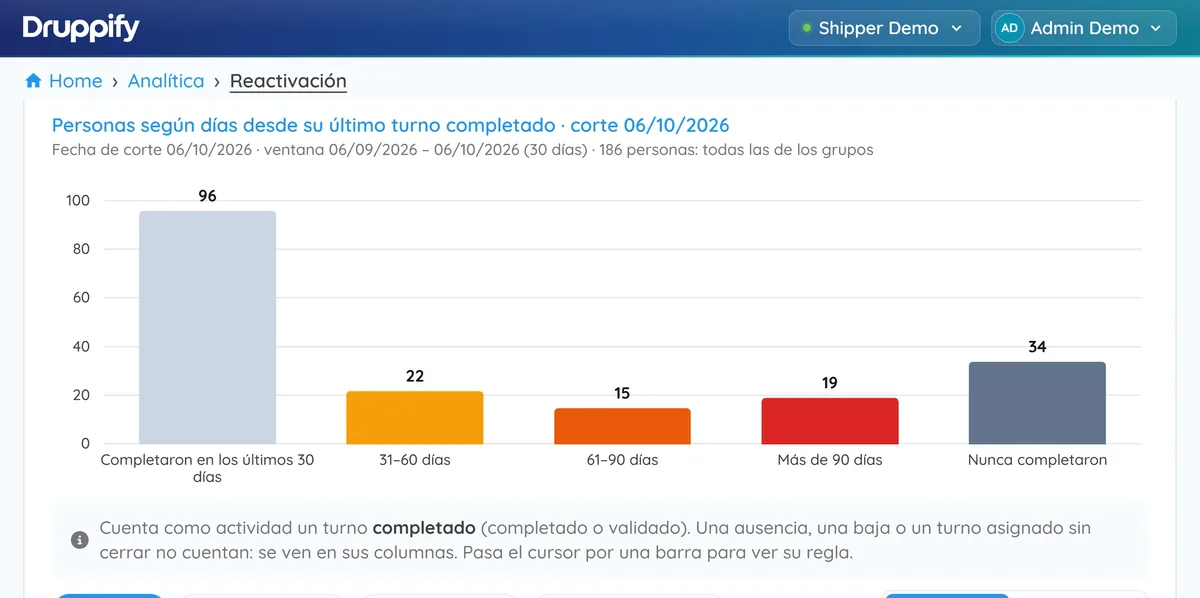
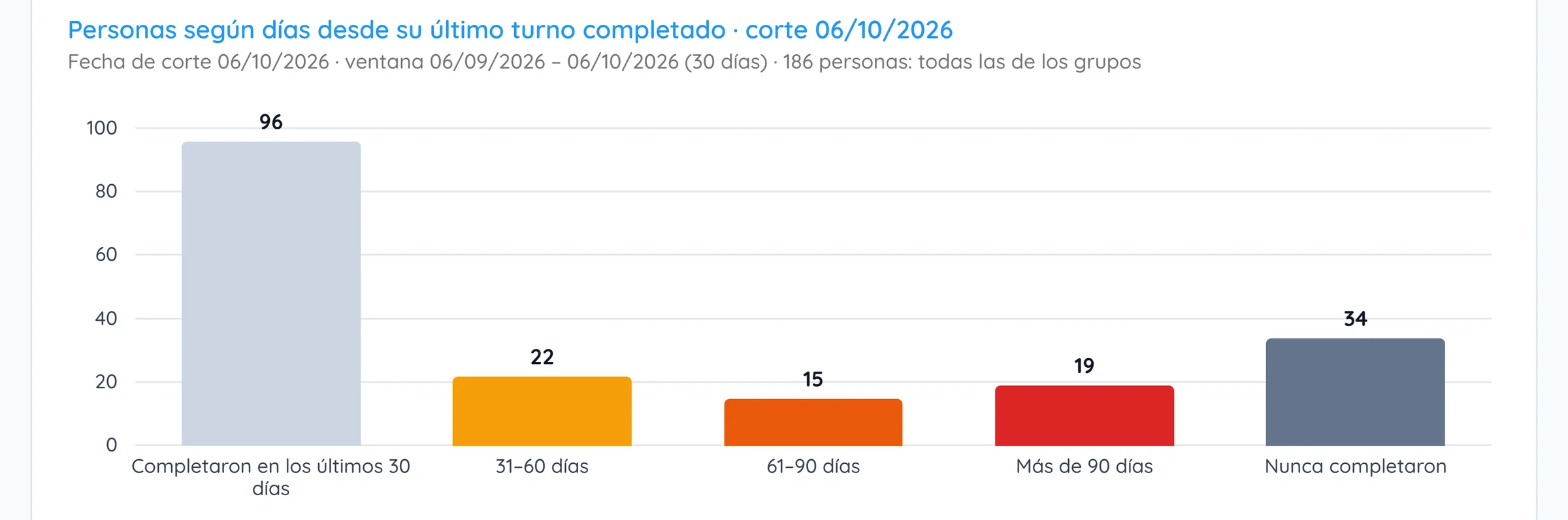
Of almost 5,400 approved service providers, 70.6% didn't complete a single shift in September 2026 and 29.4% completed at least one.
Real data · September 2026Source: Druppify operations, September 2026, aggregated figures from operators that use the platform.
At a store during peak. Your client sees it before you do, and that conversation costs more than the shift.
Repeated all year long. You pay for it twice: in money and in the service provider's trust.
Because the spreadsheet can't take one more, and hiring someone to run it doesn't add up either.
How many times a month does a shift fall through on you, and what does it cost you? You set that number. If the system prevents two a month, it pays for itself.
The question isn't whether it works today. It's what breaks first the day you win a client with twenty locations: coverage, document control or the payment calculation.
| Today | With Druppify |
|---|---|
| WhatsApp groups per store | Slots posted by store and role |
| Documents in folders and emails | Automatic document verification |
| Attendance reported by photo | Geofenced clock-in and per-client rules |
| Payments calculated by hand in a spreadsheet | Settlement calculated by formula |
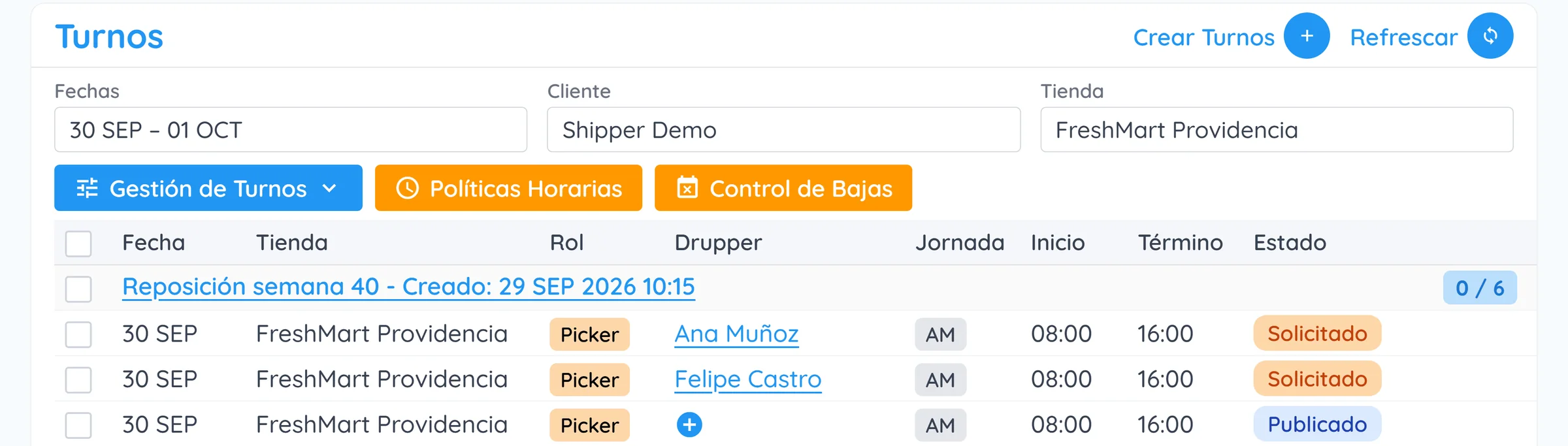
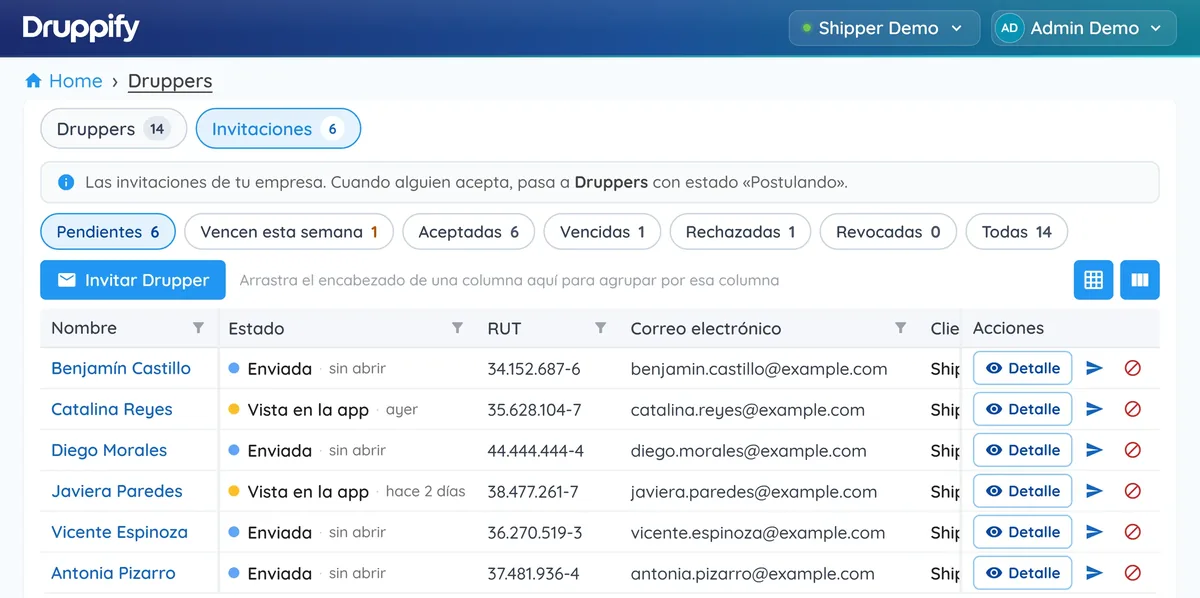
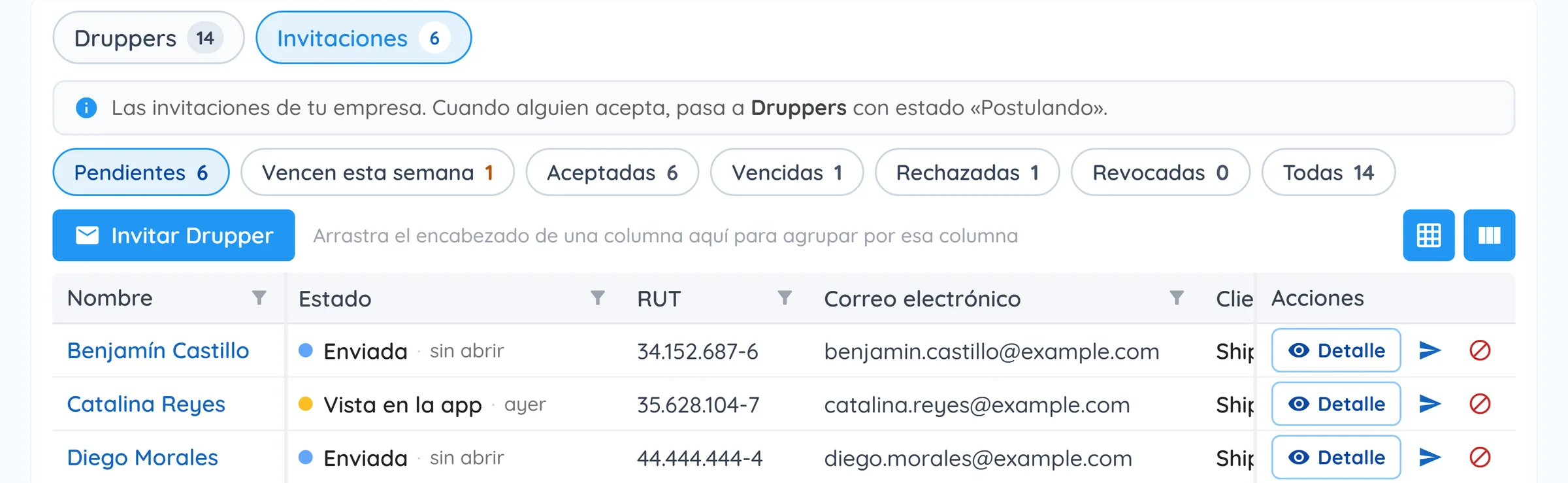
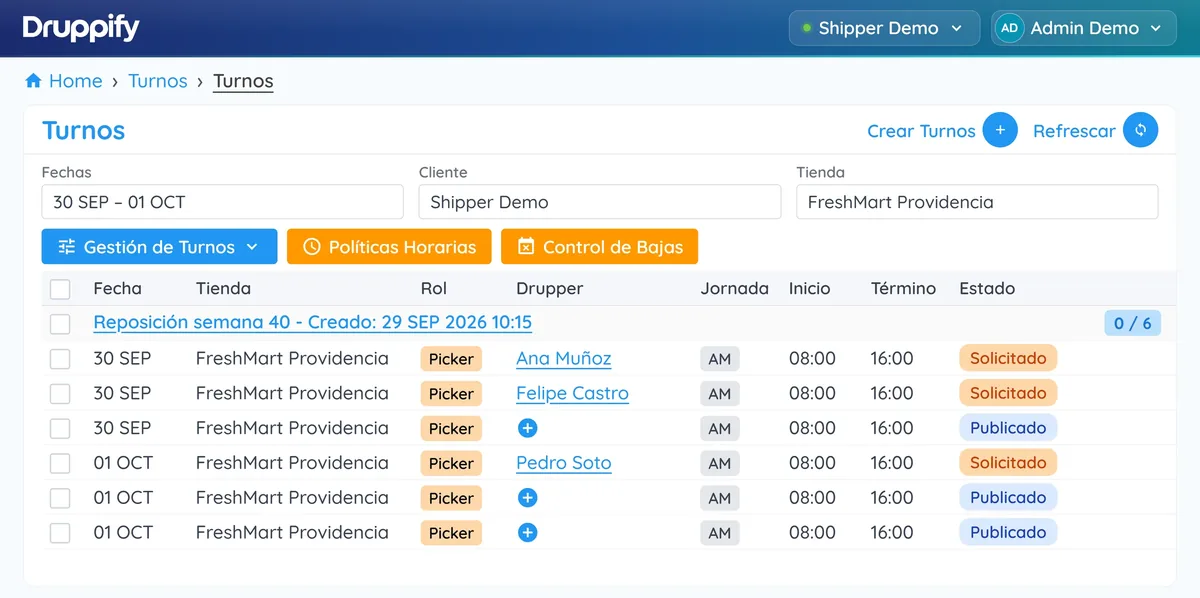
Offers by store and role, with slots and rate, open or invitation-only, in groups and in batches.
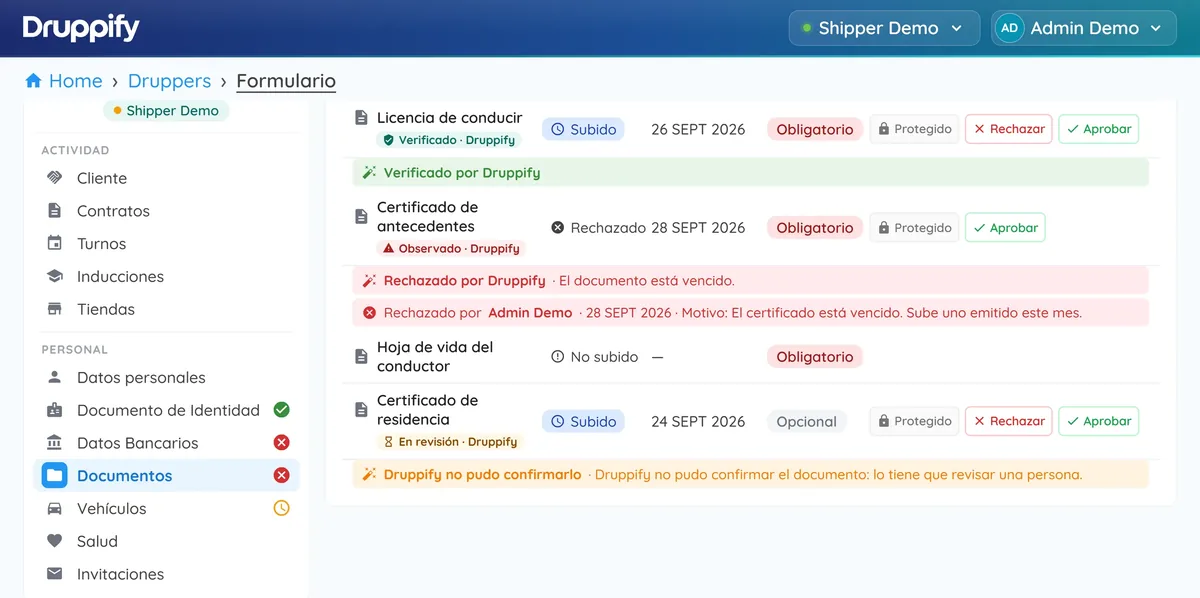
Automatic reading of ID and background records, contracts with signatures, and expiry dates that send their own alerts.
7 of every 10 service provider enquiries are about their approvalDruppify operations, September 2026, aggregated figures from operators that use the platform.
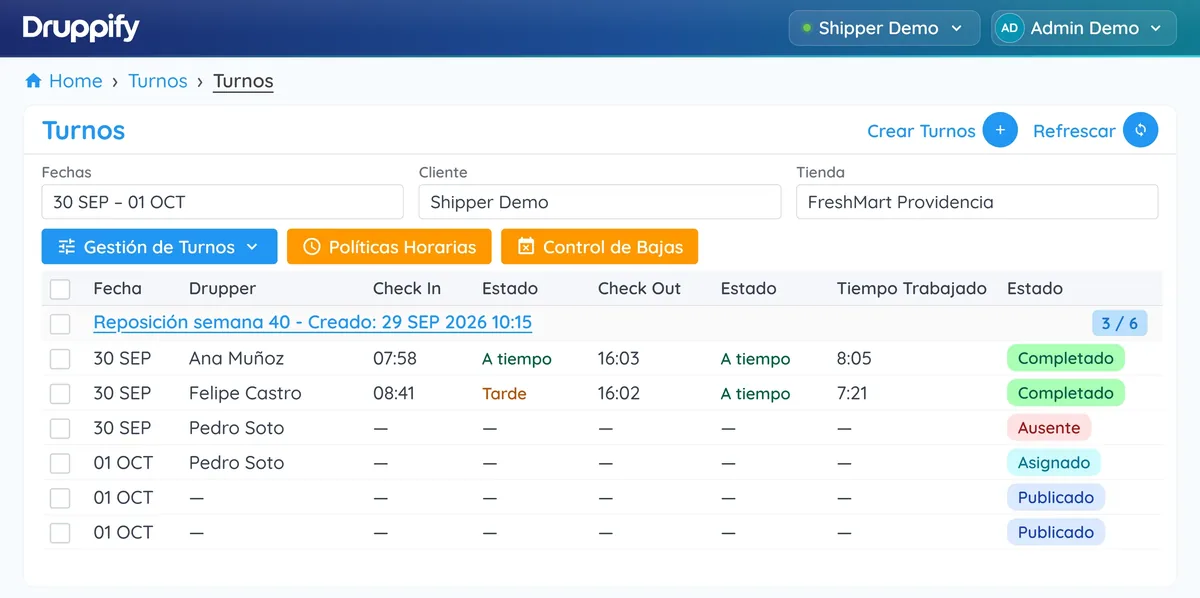
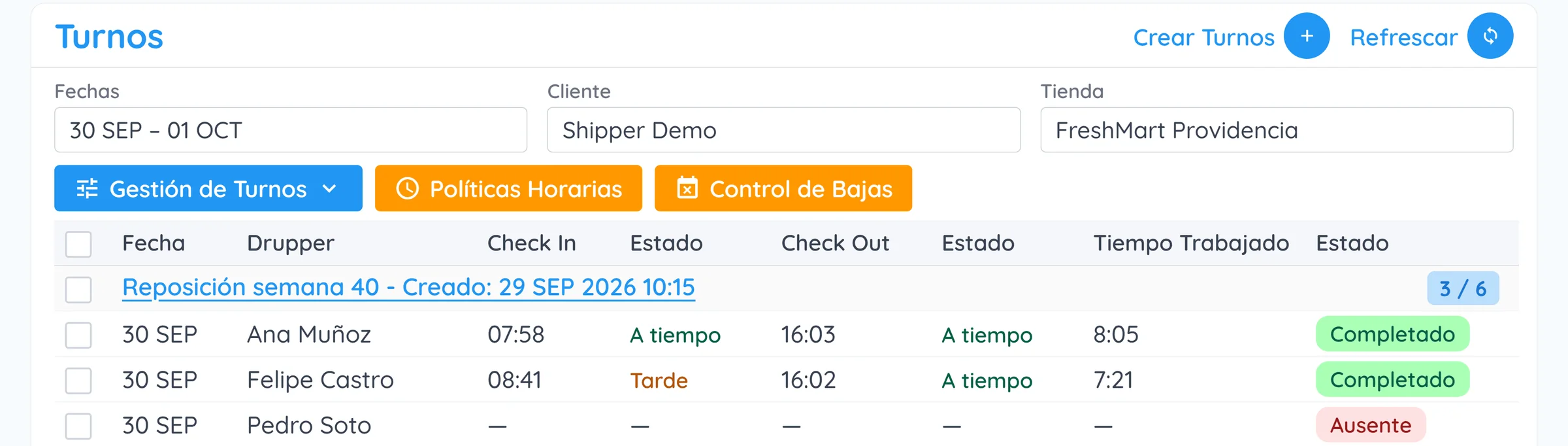
Geofenced clock-in and clock-out, punctuality classification and attendance rules as a per-client template.
Rates per hour, kilometre, order or unit, combinable by formula. Bonuses by rule and withholding by country.
A new client is a new account on the platform, not a new implementation.
The clock-in and the task can come from the equipment, not from the hand of someone in a hurry. That's the Druppify Sense layer.
Druppify Sense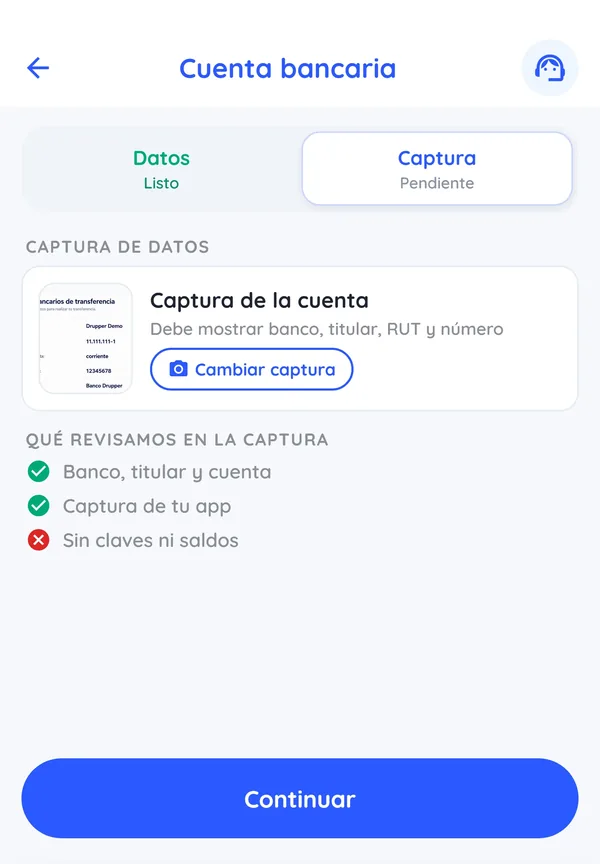

Unit of value
The managed shift
A monthly base plan, plus a rate for each client you provide services to, plus an included shift allowance with overage above it.
Why we charge this way
The price goes up when you win a new client, which is exactly when you have the means to pay for it. And the shift allowance captures your volume without penalising you for seasonality.
What it's compared against
An uncovered shift at a store during peak, and a settlement error repeated through the year.
We never compare against other software. The price is compared against the cost of the error it prevents.
We measure adoption by service providers in the first week. If it doesn't work, we don't carry on.
No. The relationship with each service provider belongs to the operator who mobilises them, in other words, you. Druppify verifies, coordinates and leaves evidence: it isn't an employer or a labour intermediary.
Yes. The problem isn't the spreadsheet: it's that it stops scaling when the third client arrives. Druppify replaces the manual calculation, not your operation.
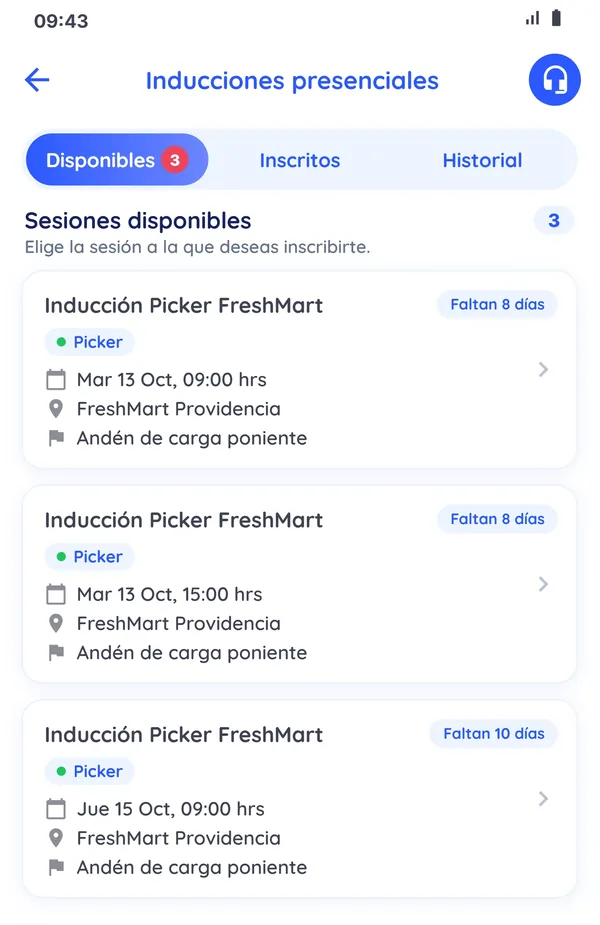
Hours. The offer is published by store and role, with slots and rate, open or by invitation.
We come with your stores and your rate already loaded. What converts is seeing the settlement calculate itself on data you recognise.
Book a demoWhat we'll ask you